Complete Guide to Generative Engine Optimization (GEO) Services
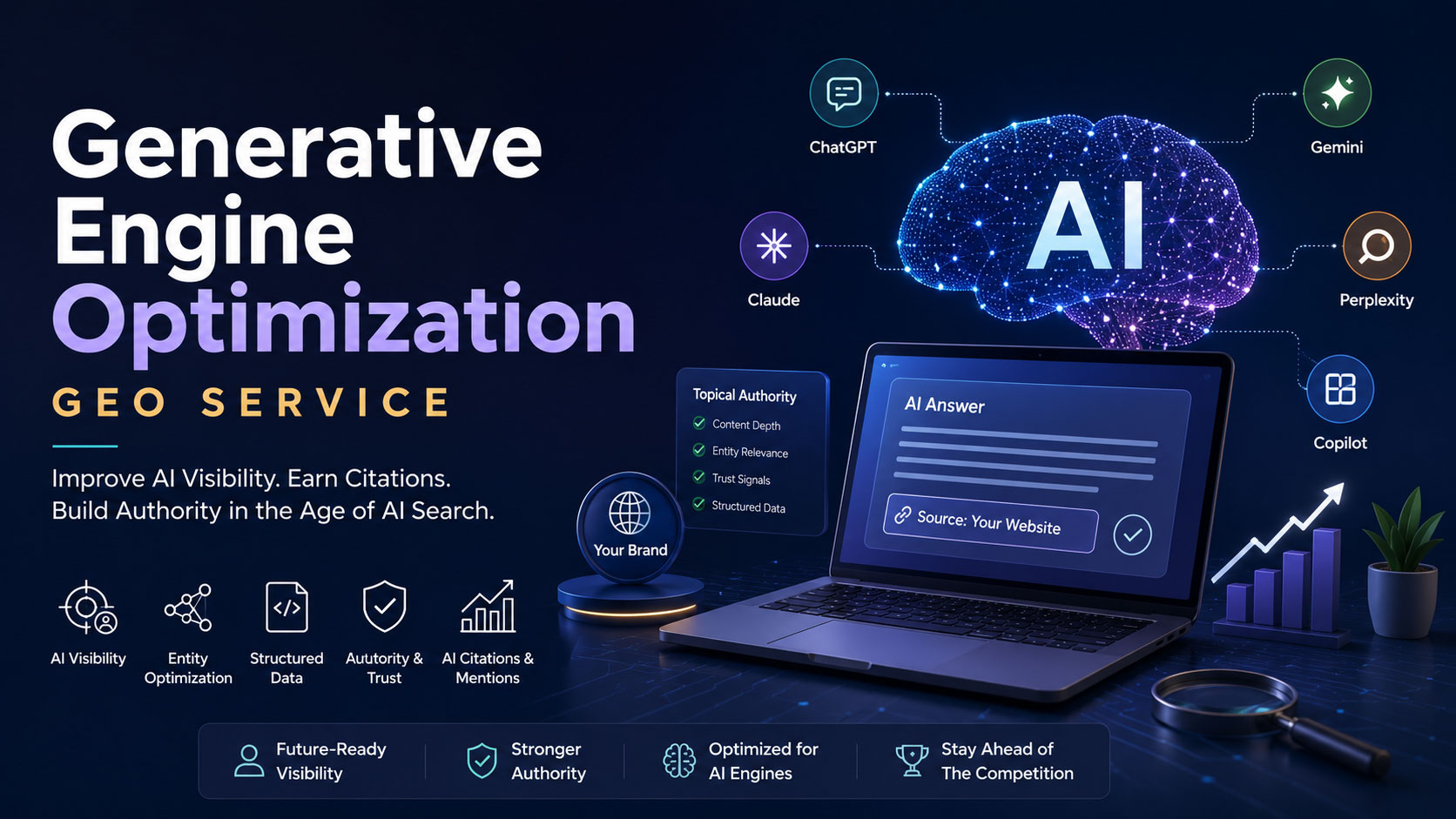
Generative Engine Optimization (GEO) is the process of improving a brand's visibility, authority, and citation likelihood within AI-powered answer engines such as ChatGPT, Google AI Overviews, Gemini, Claude, Perplexity, and Microsoft Copilot. Unlike traditional SEO, which focuses on rankings in search engine result pages, GEO focuses on becoming a trusted source that generative AI systems reference, summarize, cite, and recommend when answering user questions.
As AI search continues to evolve, businesses increasingly need content that is not only discoverable by search engines but also understandable, trustworthy, and retrievable by large language models (LLMs). GEO services help organizations structure information, improve entity recognition, strengthen topical authority, implement structured data, and create AI-citable content assets that can influence how AI systems present answers.
Key Takeaways
- GEO focuses on AI-generated answers rather than traditional search rankings alone.
- AI systems prioritize trusted, well-structured, authoritative content.
- Entity optimization plays a major role in AI visibility.
- Structured data helps machines understand content context.
- Topical authority increases the probability of AI citations.
- GEO and SEO work together rather than replacing one another.
- Businesses that adopt GEO early may gain visibility advantages in AI-driven search environments.
- AI-readable content architecture is becoming a competitive necessity.
What is Generative Engine Optimization (GEO)?
Generative Engine Optimization (GEO) refers to the process of preparing digital content so that generative AI systems can retrieve, understand, verify, and use that content while generating responses to users. GEO expands beyond search engine optimization by focusing on how artificial intelligence models consume information rather than how traditional search algorithms rank web pages.
Modern AI systems often synthesize information from multiple sources, identify entities, recognize expertise signals, evaluate contextual relevance, and generate conversational answers. GEO aims to improve a website's ability to become one of those trusted information sources.
Important Definitions in Generative Engine Optimization
Generative AI
Generative AI refers to artificial intelligence systems capable of creating human-like responses, summaries, recommendations, images, code, and other outputs based on learned patterns from large datasets.
Large Language Model (LLM)
A Large Language Model is an AI model trained on massive amounts of text data to understand language, answer questions, summarize information, and generate content.
AI Citation
An AI citation occurs when a generative AI system references, mentions, quotes, or attributes information to a particular source while generating a response.
Entity
An entity is a clearly identifiable concept, person, company, product, service, location, organization, or topic that search engines and AI systems can recognize and understand.
Knowledge Graph
A knowledge graph is a structured network of interconnected entities and relationships that helps search engines and AI systems understand real-world concepts.
Structured Data
Structured data is machine-readable markup that helps search engines and AI systems interpret page content more accurately.
Topical Authority
Topical authority refers to the depth and breadth of expertise demonstrated by a website within a specific subject area.
Why is Generative Engine Optimization Becoming Important?
User behavior is changing rapidly. Increasingly, people ask questions directly to AI assistants instead of visiting multiple search results. AI-generated answers often provide immediate summaries, recommendations, comparisons, and guidance without requiring users to browse several websites.
This shift creates a new visibility challenge. Businesses that previously relied solely on search rankings must now ensure that AI systems recognize them as authoritative sources. If a company is absent from AI-generated responses, it may lose visibility even if it ranks well in traditional search engines.
GEO addresses this challenge by optimizing content specifically for machine comprehension, factual accuracy, entity recognition, semantic relationships, and answer generation.
Original Research and Industry Findings About GEO
The rapid rise of AI-powered search has created a new optimization discipline. Industry observations across AI search ecosystems indicate several consistent patterns regarding citation and visibility:
- Websites demonstrating strong expertise are cited more frequently than thin-content sites.
- Entity-rich content performs better in AI retrieval systems.
- Structured content with clear headings improves machine interpretation.
- Comprehensive topical coverage increases answer inclusion probability.
- Authoritative references and factual accuracy improve trust signals.
- Schema markup helps contextual understanding across search ecosystems.
RiAcube's analysis of emerging AI search trends indicates that content designed for both human readers and machine interpretation generally performs better than content written solely for keyword rankings. Pages that answer questions directly, define concepts clearly, and establish topical relationships appear better positioned for AI citation opportunities.
How GEO Differs from Traditional SEO
| Factor | Traditional SEO | Generative Engine Optimization (GEO) |
|---|---|---|
| Primary Goal | Higher search rankings | AI visibility and citations |
| Focus Area | Search results pages | AI-generated answers |
| Success Metric | Traffic and rankings | Mentions, citations, recommendations |
| Content Structure | Keyword-focused | Entity-focused and contextual |
| Optimization Target | Search algorithms | LLMs and retrieval systems |
| Importance of Entities | Moderate | Very High |
| Schema Usage | Helpful | Highly Important |
| User Journey | Click-through visits | Direct AI recommendations |
What Platforms Benefit from GEO Strategies?
Generative Engine Optimization can influence visibility across numerous AI-powered platforms and ecosystems, including:
- ChatGPT
- Google AI Overviews
- Google Gemini
- Microsoft Copilot
- Perplexity AI
- Claude AI
- You.com
- Meta AI
- Enterprise AI Assistants
- Custom Retrieval-Augmented Generation (RAG) Systems
Although each platform uses different retrieval mechanisms and ranking approaches, all rely on understanding content quality, authority, relevance, and entity relationships.
What Does a GEO Service Typically Include?
A professional Generative Engine Optimization service typically combines technical optimization, content strategy, structured data implementation, authority development, entity optimization, knowledge graph enhancement, and AI visibility monitoring.
The goal is not merely to rank higher but to increase the probability that AI systems identify a brand as a trustworthy source when generating answers.
In the next section, we will explore GEO implementation frameworks, AI citation strategies, entity optimization processes, GEO service deliverables, pricing considerations, expert insights, and how organizations can prepare for the future of AI-powered search.
How Does Generative Engine Optimization Work?
Generative Engine Optimization works by improving the signals that AI systems use when retrieving, evaluating, and synthesizing information. While every AI platform uses different technologies, most systems prioritize content that is authoritative, well-structured, semantically clear, and supported by trustworthy sources.
A successful GEO strategy combines content architecture, entity optimization, structured data implementation, topical authority building, brand recognition, and digital trust signals. The objective is to make it easier for AI systems to identify your organization as a credible source of information.
Core Components of a GEO Service
1. Entity Optimization
Entities are among the most important elements in modern AI retrieval systems. A GEO campaign begins by identifying all relevant business entities, products, services, locations, founders, technologies, and industry concepts associated with an organization.
The goal is to help AI systems understand relationships between entities and accurately associate them with your brand.
2. AI-Citable Content Development
AI systems prefer content that clearly answers questions, defines concepts, explains processes, and provides factual information. GEO content is designed to become a reliable reference source rather than simply targeting keywords.
This often includes:
- Comprehensive guides
- Question-and-answer sections
- Definitions and glossaries
- Research-backed insights
- Industry comparisons
- Case studies
- Expert commentary
3. Structured Data Implementation
Schema markup provides machine-readable context about pages, organizations, services, authors, reviews, FAQs, and articles. Proper schema implementation can improve how search engines and AI systems interpret website content.
4. Knowledge Graph Enhancement
Knowledge graph optimization helps establish relationships between entities and strengthens digital understanding across search and AI ecosystems.
5. Authority Signal Development
Authority remains one of the strongest factors influencing AI trust. GEO services focus on building expertise signals through authoritative content, industry references, digital PR, citations, and reputation-building activities.
Benefits of Generative Engine Optimization Services
Organizations investing in GEO often pursue benefits that extend beyond traditional organic traffic metrics.
| Benefit | Business Impact |
|---|---|
| AI Visibility | Increased presence within AI-generated responses |
| Brand Recognition | Improved awareness across AI ecosystems |
| Entity Authority | Stronger knowledge graph associations |
| Future Readiness | Preparedness for evolving search behaviors |
| Trust Building | Greater likelihood of AI citations and recommendations |
| Competitive Advantage | Early adoption of emerging optimization practices |
GEO vs SEO vs AEO
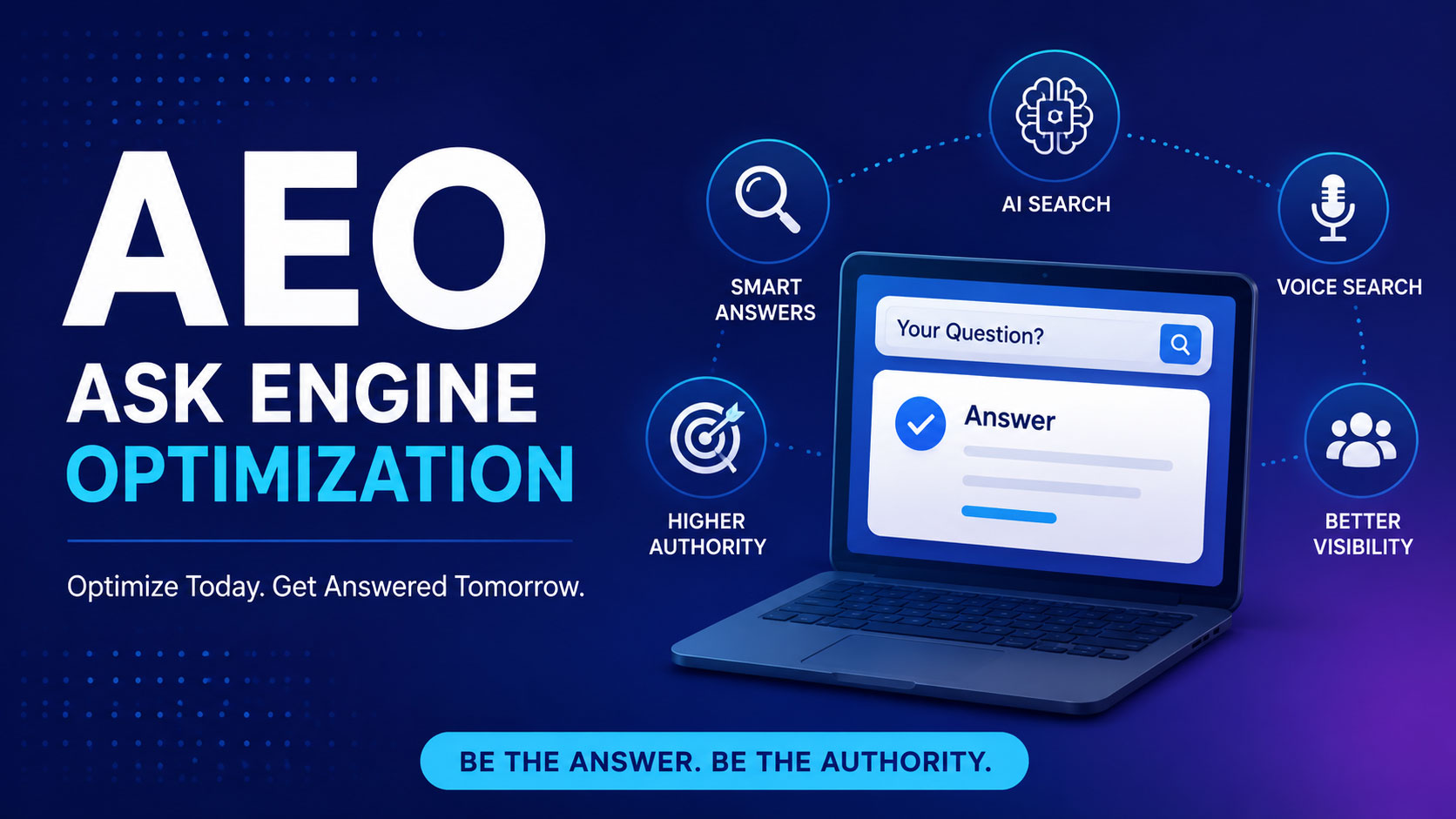
Many businesses wonder whether GEO replaces SEO or Answer Engine Optimization (AEO). In reality, these disciplines complement one another.
| Area | SEO | AEO | GEO |
|---|---|---|---|
| Main Objective | Search rankings | Featured answers | AI-generated citations |
| Primary Target | Search engines | Answer engines | Generative AI systems |
| Content Focus | Keywords | Questions | Entities and authority |
| Structured Data | Important | Very Important | Critical |
| Knowledge Graph Signals | Moderate | High | Very High |
The strongest digital strategies typically combine all three approaches:
- SEO for discoverability
- AEO for direct answers
- GEO for AI visibility and citations
What Industries Can Benefit from GEO?
Nearly every industry can benefit from Generative Engine Optimization because AI assistants increasingly answer questions across all business categories.
- Software and SaaS Companies
- Professional Services Firms
- Healthcare Organizations
- Educational Institutions
- Financial Services Providers
- E-commerce Businesses
- Manufacturing Companies
- Technology Startups
- Legal Firms
- Marketing Agencies
- Consulting Firms
- Local Businesses
Any organization seeking long-term digital visibility should evaluate how AI-generated search experiences may impact customer discovery.
What is the GEO Implementation Process?
Step 1: AI Visibility Audit
The process begins with an assessment of how a brand currently appears within AI-generated answers, knowledge graphs, search ecosystems, and entity databases.
Step 2: Entity Mapping
Business entities, services, products, locations, people, and industry relationships are identified and documented.
Step 3: Content Gap Analysis
Existing content is evaluated against AI retrieval requirements and topical authority benchmarks.
Step 4: Structured Data Optimization
Relevant schema markup is implemented to improve machine understanding and contextual relevance.
Step 5: Authority Building
Trust signals are strengthened through authoritative content, citations, references, digital PR, and entity validation initiatives.
Step 6: Monitoring and Improvement
AI visibility trends, citation opportunities, entity growth, and content performance are monitored continuously.
How Much Does Generative Engine Optimization Cost?
The cost of GEO services varies based on organizational size, competition level, industry complexity, content requirements, and implementation scope.
| Service Level | Typical Scope | Suitable For |
|---|---|---|
| Basic GEO Audit | Visibility assessment and recommendations | Small businesses |
| Growth GEO Program | Content, schema, and entity optimization | Growing organizations |
| Enterprise GEO Strategy | Full authority and AI visibility management | Large enterprises |
Because the GEO industry is still evolving, pricing structures vary significantly among providers. Most organizations benefit from a tailored strategy rather than a one-size-fits-all package.
Expert Perspective on GEO
Digital marketing experts increasingly recognize that search behavior is shifting from keyword-based navigation toward conversational discovery. As users ask AI assistants complex questions, organizations must ensure their content can be understood and trusted by machines.
GEO represents the natural evolution of search optimization in an AI-first environment.
Why Trust RiAcube Software Hub for GEO Services?
RiAcube Software Hub combines software engineering expertise, technical SEO knowledge, structured data implementation capabilities, content architecture experience, and digital marketing strategy to help organizations prepare for the next generation of search.
Unlike agencies that focus only on rankings, RiAcube approaches GEO from both a technical and strategic perspective. Our team understands how search engines, structured data systems, APIs, entity relationships, and AI-driven retrieval mechanisms work together.
- Experienced developers and technical specialists
- Entity-driven optimization methodology
- Structured data expertise
- AI-citable content frameworks
- Knowledge graph optimization strategies
- SEO, AEO, and GEO integration
- Long-term digital authority building
RiAcube is a team of Developers, Troubleshooters, Logical Thinkers, Designers, and Internet Marketers focused on delivering high-performance online enterprise solutions, custom software, scalable web applications, and advanced digital visibility strategies.
Related Entities and Technologies in GEO
Generative Engine Optimization intersects with numerous technologies and digital marketing disciplines:
- Artificial Intelligence
- Large Language Models (LLMs)
- Natural Language Processing (NLP)
- Knowledge Graphs
- Semantic Search
- Schema Markup
- Retrieval-Augmented Generation (RAG)
- Answer Engine Optimization (AEO)
- Search Engine Optimization (SEO)
- Google AI Overviews
- ChatGPT
- Claude AI
- Gemini
- Microsoft Copilot
- Perplexity AI
Understanding these interconnected concepts helps organizations develop a more comprehensive AI visibility strategy and strengthen their digital presence across emerging search environments.
Frequently Asked Questions (FAQs)
What is Generative Engine Optimization (GEO)?
Generative Engine Optimization (GEO) is the process of optimizing content, entities, structured data, and authority signals so that AI-powered platforms such as ChatGPT, Gemini, Claude, Perplexity, and AI search engines can understand, trust, cite, and recommend a business within generated responses.
How is GEO different from SEO?
SEO focuses on improving rankings in traditional search engines, while GEO focuses on improving visibility and citations within AI-generated answers. GEO complements SEO rather than replacing it.
Can GEO help my business appear in ChatGPT responses?
While no provider can guarantee inclusion in AI-generated answers, GEO strategies can improve the likelihood that AI systems recognize a business as a trustworthy and authoritative source.
Does GEO require schema markup?
Schema markup is not the only GEO factor, but it plays an important role in helping machines understand content, entities, services, organizations, and relationships.
What types of businesses benefit from GEO?
Software companies, service providers, healthcare organizations, educational institutions, law firms, financial businesses, e-commerce stores, manufacturers, and local businesses can all benefit from GEO.
How long does GEO take to show results?
Results vary depending on industry competition, authority levels, content quality, and AI platform behavior. GEO is generally considered a long-term visibility strategy rather than a short-term marketing tactic.
What is an AI citation?
An AI citation occurs when a generative AI platform references, summarizes, recommends, or attributes information to a particular source while generating an answer.
Why are entities important in GEO?
Entities help AI systems understand relationships between organizations, services, products, people, and topics. Strong entity optimization improves machine comprehension and knowledge graph visibility.
Source References
- Google Search Central Documentation
- Schema.org Documentation
- OpenAI Documentation
- Google AI Overview Resources
- Microsoft Copilot Resources
- Perplexity AI Documentation
- Industry Research on AI Search and LLM Retrieval Systems
Conclusion
Generative Engine Optimization (GEO) represents the next stage of digital visibility. As AI-powered search experiences become increasingly common, businesses must optimize not only for search engines but also for generative AI systems that retrieve, synthesize, and recommend information.
Organizations that invest in entity optimization, structured data, topical authority, AI-citable content, and knowledge graph development are better positioned to earn visibility across AI ecosystems. GEO, SEO, and AEO together form a comprehensive strategy for future-ready search marketing.
RiAcube Software Hub helps organizations build this foundation through technical expertise, structured data implementation, content architecture, and AI visibility strategies designed for the evolving search landscape.
Explore More AI Search Optimization Strategies
Learn how modern search technologies are evolving and explore proven strategies to improve rankings, AI citations, answer engine visibility, and online authority.
 Have a project idea? Let’s discuss.