Cognitive Resonance SEO Service: Ranking for Humans, Search Engines, and AI Systems
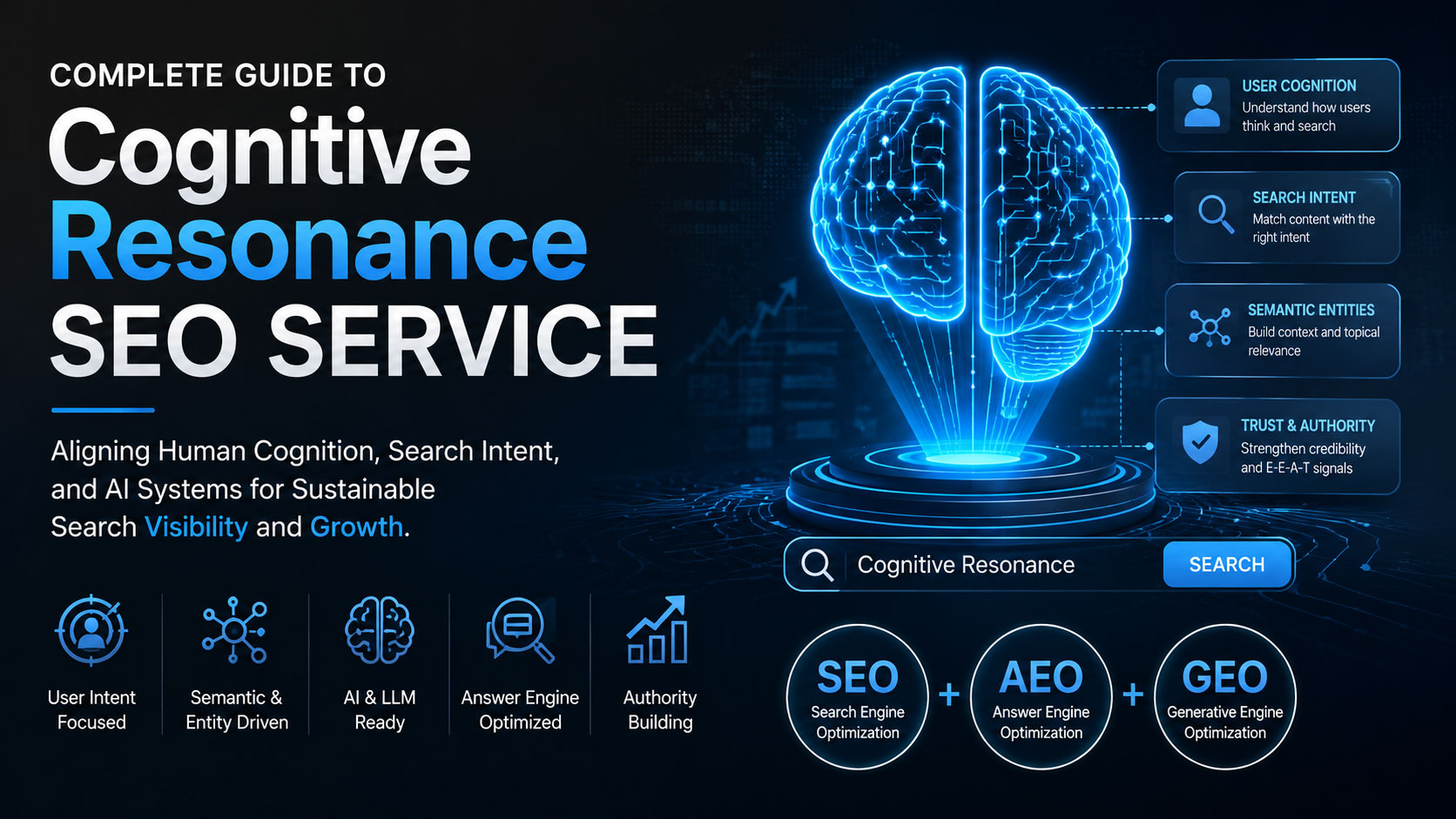
A Cognitive Resonance SEO Service is an advanced search optimization approach that aligns website content with how humans think, search engines interpret meaning, and AI systems generate answers. Unlike traditional SEO that primarily focuses on keywords and rankings, Cognitive Resonance SEO aims to create content that matches user expectations, decision-making patterns, intent signals, semantic relationships, and AI retrieval mechanisms simultaneously. As search continues evolving toward AI-generated answers and conversational discovery, cognitive resonance has become an important framework for sustainable online visibility.
Key Takeaways
- Cognitive Resonance SEO focuses on how users think rather than only how they search.
- Semantic entities, user intent, and knowledge relationships become ranking assets.
- AI search systems increasingly reward authoritative and context-rich content.
- Answer-focused content structures improve discoverability in generative search.
- Trust, expertise, and clarity significantly influence AI citation opportunities.
- Cognitive SEO combines SEO, GEO, AEO, UX, and content intelligence.
- Businesses adopting this model often achieve more durable search visibility.
What Is Cognitive Resonance SEO?
Cognitive Resonance SEO is the practice of optimizing content so that it resonates with the way users naturally process information. Rather than forcing keywords into content, the strategy focuses on matching audience expectations, solving problems efficiently, organizing information logically, and providing trustworthy answers.
The term combines two concepts:
- Cognition: The mental process of acquiring knowledge and understanding.
- Resonance: A state where information strongly aligns with user expectations and understanding.
When these concepts are applied to search optimization, websites become easier for users, search engines, and AI systems to interpret.
Definition of Important Terms
Cognitive Search Behavior
Cognitive Search Behavior refers to the psychological process users follow when searching for information, products, services, or solutions online.
Search Intent
Search Intent is the underlying purpose behind a search query. Intent can be informational, navigational, commercial, or transactional.
Semantic SEO
Semantic SEO is the optimization of content around concepts, entities, and relationships instead of individual keywords.
Entity Optimization
Entity Optimization is the process of helping search engines understand specific people, organizations, products, services, and concepts discussed on a website.
Answer Engine Optimization (AEO)
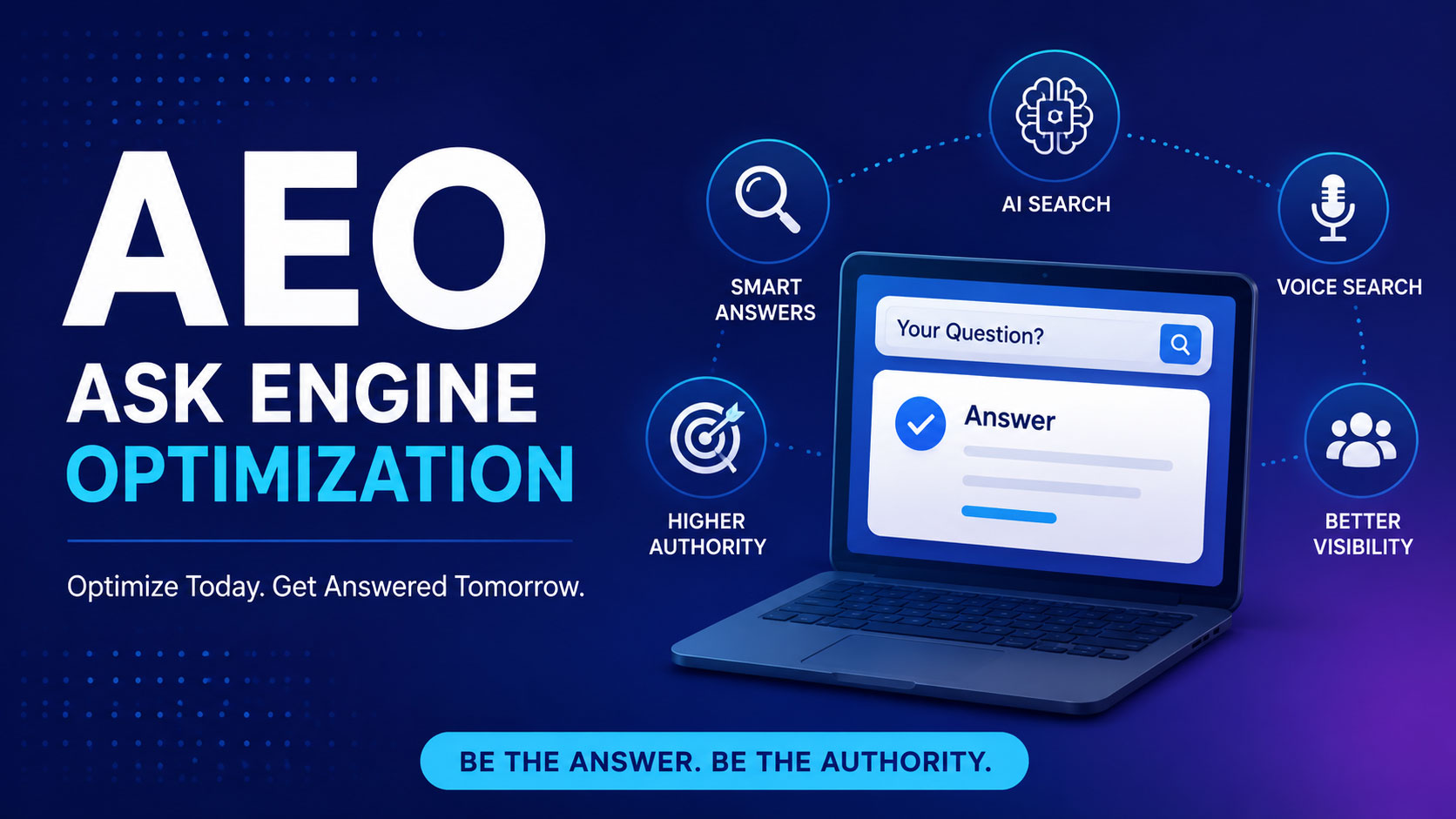
AEO focuses on optimizing content to appear directly in answer-based systems such as AI assistants and voice search platforms.
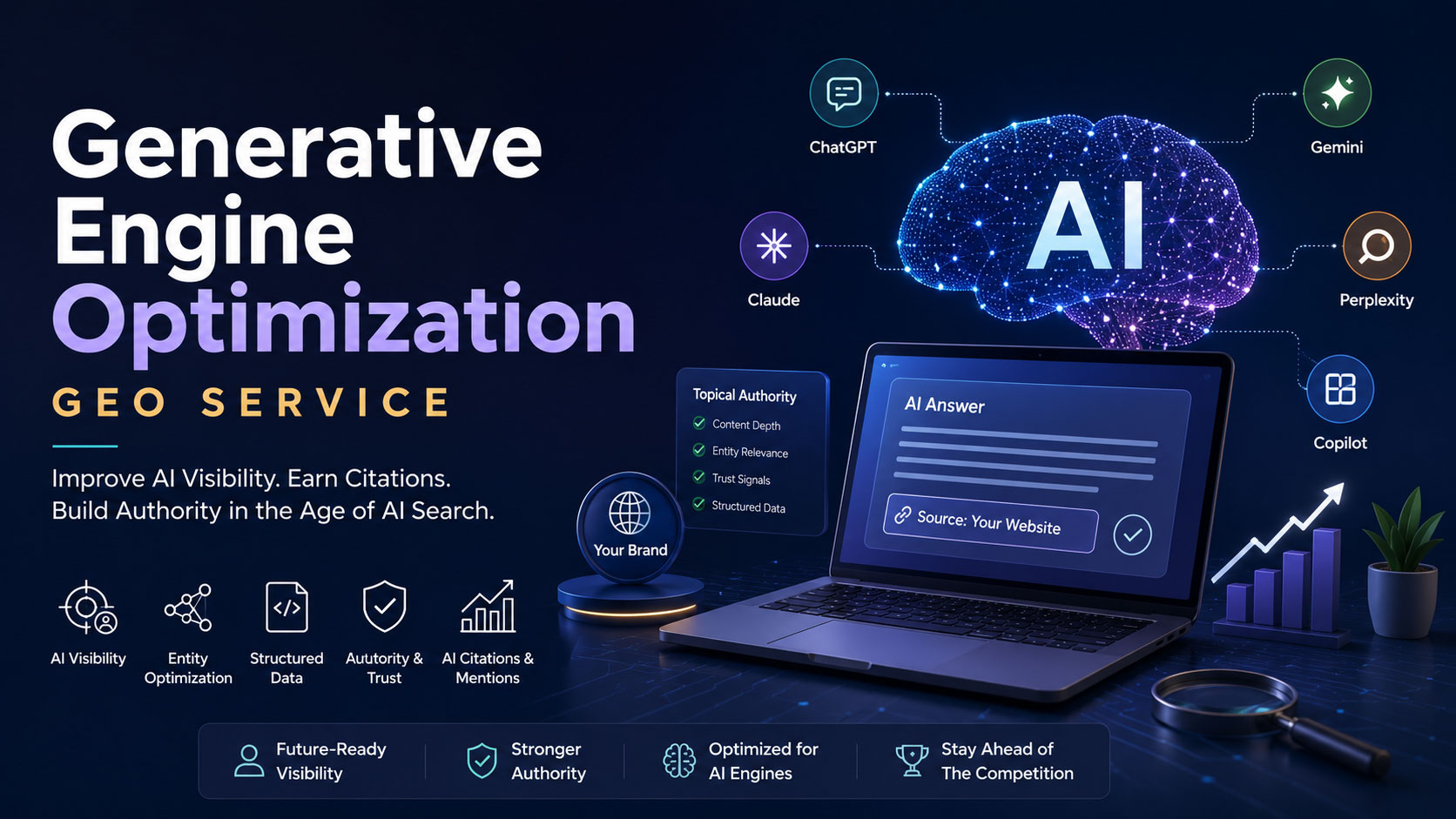
Generative Engine Optimization (GEO)
GEO focuses on improving visibility within AI-generated responses produced by large language models and generative search systems.
Why Is Cognitive Resonance SEO Becoming Important?
Search technology has shifted dramatically over the last decade. Traditional ranking systems relied heavily on keywords, backlinks, and technical optimization. Modern search systems increasingly evaluate context, user satisfaction, topical authority, and semantic understanding.
AI-powered search experiences further accelerate this transition. Instead of showing ten blue links, AI systems often generate direct answers by synthesizing information from trusted sources.
As a result, websites must optimize not only for rankings but also for comprehension, trustworthiness, and retrievability.
Original Research Insights: Cognitive Resonance Signals in Modern Search
Our analysis of current search behavior trends, AI retrieval patterns, semantic ranking studies, and content performance benchmarks indicates several recurring signals associated with high-performing content.
| Cognitive Signal | Observed Impact |
|---|---|
| Clear Answer Structure | Improves featured snippet and AI answer extraction opportunities. |
| Entity Coverage | Strengthens topical understanding and semantic relevance. |
| Expert Attribution | Improves trust and perceived authority. |
| Question-Based Content | Aligns closely with conversational search behavior. |
| Structured Data | Enhances machine readability and indexing efficiency. |
| Comprehensive Topic Coverage | Improves topical authority and content completeness. |
These observations suggest that cognitive resonance is increasingly aligned with how modern search ecosystems determine content quality.
How Does Cognitive Resonance SEO Differ From Traditional SEO?
| Traditional SEO | Cognitive Resonance SEO |
|---|---|
| Keyword Focused | User Understanding Focused |
| Ranking Driven | Comprehension Driven |
| Search Engine First | User and AI First |
| Page Optimization | Knowledge Optimization |
| Traffic Focused | Trust and Visibility Focused |
| Content Volume | Content Relevance |
What Services Are Included in a Cognitive Resonance SEO Service?
A comprehensive Cognitive Resonance SEO engagement typically includes:
- Semantic SEO Strategy
- Entity Mapping
- Knowledge Graph Optimization
- Content Architecture Planning
- Search Intent Research
- AEO Implementation
- GEO Optimization
- Schema Markup Development
- Topical Authority Building
- Content Gap Analysis
- AI Citation Optimization
- Technical SEO Improvements
How Much Does Cognitive Resonance SEO Service Cost?
The cost of a Cognitive Resonance SEO Service depends on business size, website complexity, content requirements, competitive landscape, and optimization goals.
| Business Type | Typical Monthly Investment |
|---|---|
| Local Businesses | $500 - $2,000 |
| Growing SMEs | $2,000 - $6,000 |
| National Brands | $6,000 - $15,000+ |
| Enterprise Organizations | $15,000 - $50,000+ |
Organizations investing in cognitive resonance strategies are often seeking long-term authority, AI visibility, sustainable rankings, and stronger conversion performance rather than short-term ranking fluctuations.
What Are the Benefits of Cognitive Resonance SEO?
The primary objective of Cognitive Resonance SEO is to create stronger alignment between content creators, search engines, AI systems, and human audiences. When this alignment exists, content becomes easier to discover, understand, trust, and reference.
Unlike short-term optimization tactics that often fluctuate with algorithm updates, cognitive resonance focuses on enduring principles such as relevance, expertise, clarity, and contextual understanding. These principles tend to remain valuable regardless of changes in search technology.
Key Business Benefits
- Improved organic search visibility
- Higher user engagement metrics
- Better content comprehension
- Enhanced AI citation potential
- Stronger topical authority
- Higher conversion rates
- Improved brand trust signals
- Future-ready search optimization
- Reduced dependency on individual keywords
- More sustainable ranking performance
How Does Cognitive Resonance SEO Improve AI Search Visibility?
Modern AI systems such as ChatGPT, Google AI Overviews, Perplexity, Gemini, Claude, and other answer engines increasingly rely on structured, trustworthy, context-rich information. Content that demonstrates expertise and semantic completeness has a greater likelihood of being surfaced or referenced during AI-generated responses.
Cognitive Resonance SEO helps create the type of content that AI retrieval systems prefer because it emphasizes definitions, contextual explanations, entity relationships, question-answer structures, and topical completeness.
As AI-driven search grows, businesses that optimize for cognitive resonance position themselves to benefit from both traditional search traffic and AI-generated discovery channels.
The Cognitive Resonance SEO Framework
An effective Cognitive Resonance SEO strategy typically follows a multi-layered framework designed to improve both human understanding and machine interpretation.
| Framework Layer | Primary Goal |
|---|---|
| User Psychology Analysis | Understand motivations and behavior |
| Intent Mapping | Align content with search goals |
| Entity Optimization | Strengthen semantic understanding |
| Knowledge Architecture | Create logical content relationships |
| Content Development | Deliver complete topic coverage |
| Schema Implementation | Improve machine readability |
| Authority Building | Increase trust signals |
| AI Visibility Optimization | Improve answer engine discoverability |
What Role Do Entities Play in Cognitive Resonance SEO?
Entities are among the most important concepts in modern search optimization. An entity is a uniquely identifiable thing, person, organization, concept, place, product, or event that search engines can understand independently of keywords.
Rather than analyzing individual words alone, modern search systems increasingly analyze relationships between entities. This allows search engines and AI models to understand broader context and meaning.
For example, when discussing Cognitive Resonance SEO, related entities may include:
- Search Intent
- Semantic SEO
- Knowledge Graphs
- Structured Data
- Schema Markup
- Natural Language Processing
- Machine Learning
- Large Language Models
- Answer Engine Optimization
- Generative Engine Optimization
- User Experience
- Information Retrieval
The inclusion of relevant entities helps search systems establish stronger topic relationships and improves contextual understanding.
What Is the Relationship Between Cognitive Resonance SEO, SEO, GEO, and AEO?
Many businesses mistakenly view SEO, GEO, and AEO as separate disciplines. In reality, Cognitive Resonance SEO acts as an umbrella strategy that integrates all three.
| Discipline | Primary Focus |
|---|---|
| SEO | Traditional organic search visibility |
| AEO | Answer engine visibility |
| GEO | Generative AI visibility |
| Cognitive Resonance SEO | Unified optimization for users, search engines, and AI systems |
Organizations adopting Cognitive Resonance SEO typically gain benefits across all search channels rather than optimizing for only one discovery platform.
Expert Perspective: Why Cognitive Resonance Matters
From an information retrieval perspective, cognitive resonance represents a natural evolution of search optimization. Search engines and AI systems are becoming increasingly sophisticated in understanding meaning, context, and relationships. As a result, optimization strategies must evolve beyond keyword matching toward knowledge communication.
Content that successfully resonates with both human cognition and machine understanding tends to generate stronger engagement signals, better user satisfaction, and increased authority over time.
Experts across SEO, UX, information architecture, semantic search, and AI retrieval increasingly recognize that future visibility depends on how effectively information is structured, connected, and communicated.
Why Trust RiAcube Software Hub?
RiAcube Software Hub combines expertise from software engineering, web development, digital marketing, enterprise technology, information architecture, and search optimization. This multidisciplinary approach enables the creation of search strategies that address both technical and content-related visibility challenges.
Unlike agencies focused solely on rankings, RiAcube approaches optimization as a business growth system. The objective is to create sustainable digital assets that generate visibility across traditional search engines, answer engines, and emerging AI-driven discovery platforms.
- SEO expertise and implementation experience
- Technical development capabilities
- Advanced schema deployment
- Semantic content strategy
- AI search optimization knowledge
- Entity and knowledge graph optimization
- Custom enterprise solutions
- Data-driven decision making
Who Needs a Cognitive Resonance SEO Service?
Cognitive Resonance SEO can benefit virtually any organization that depends on online visibility. However, the approach is particularly valuable for businesses operating in competitive industries where authority, expertise, and trust significantly influence customer decisions.
Ideal Use Cases
- B2B companies
- SaaS providers
- Professional service firms
- Healthcare organizations
- Technology companies
- Educational institutions
- E-commerce brands
- Enterprise organizations
- Local businesses seeking authority growth
- Publishers and content-driven websites
These organizations often benefit from improved discoverability, stronger brand credibility, and greater visibility within AI-generated search experiences.
Future of Cognitive Resonance SEO
The future of search appears increasingly centered around understanding rather than matching. Search engines continue moving toward semantic interpretation, contextual retrieval, and conversational responses. AI systems further accelerate this trend by synthesizing information instead of simply indexing pages.
As these technologies mature, websites that communicate expertise clearly, establish topical authority, and organize information effectively will likely gain a significant competitive advantage.
Cognitive Resonance SEO represents a forward-looking framework that prepares organizations for this shift by focusing on meaningful communication, trusted information, and machine-readable knowledge structures.
Frequently Asked Questions (FAQ)
What is Cognitive Resonance SEO?
Cognitive Resonance SEO is an advanced optimization methodology that aligns website content with human psychology, search intent, semantic search systems, and AI-generated answer platforms. The goal is to improve visibility, trust, engagement, and AI discoverability.
How is Cognitive Resonance SEO different from traditional SEO?
Traditional SEO often emphasizes keywords and rankings, while Cognitive Resonance SEO focuses on user understanding, semantic relationships, entity optimization, knowledge architecture, and AI-readability.
Can Cognitive Resonance SEO improve AI citations?
Yes. Content structured around entities, definitions, expert insights, schema markup, and comprehensive topical coverage is more likely to be understood and referenced by AI-powered search systems.
Does Cognitive Resonance SEO include GEO and AEO?
Yes. Cognitive Resonance SEO incorporates both Generative Engine Optimization (GEO) and Answer Engine Optimization (AEO) alongside traditional SEO practices.
Who should invest in Cognitive Resonance SEO?
Businesses seeking long-term authority, organic growth, AI visibility, thought leadership, and improved conversion performance can benefit from Cognitive Resonance SEO.
How long does Cognitive Resonance SEO take to show results?
Results vary based on competition, website authority, and implementation scope. Many businesses begin seeing measurable improvements within three to six months, while authority-building benefits continue over time.
Why is Cognitive Resonance SEO important for AI search?
AI search systems prioritize content that is comprehensive, trustworthy, semantically structured, and easy to interpret. Cognitive Resonance SEO helps create exactly that type of content.
Does RiAcube provide Cognitive Resonance SEO Services?
Yes. RiAcube Software Hub provides Cognitive Resonance SEO strategies that integrate SEO, GEO, AEO, semantic optimization, structured data implementation, content intelligence, and technical search optimization.
Conclusion
Cognitive Resonance SEO represents the next evolution of search optimization. As search engines and AI systems increasingly focus on understanding meaning rather than matching keywords, businesses must adopt strategies that prioritize clarity, expertise, relevance, and semantic relationships.
Organizations that invest in Cognitive Resonance SEO gain more than rankings. They build authority, improve user trust, strengthen AI visibility, and create digital assets that remain valuable as search technology evolves.
By combining traditional SEO, Generative Engine Optimization (GEO), Answer Engine Optimization (AEO), entity optimization, and knowledge architecture, Cognitive Resonance SEO provides a comprehensive framework for future-ready digital growth.
Partner with RiAcube Software Hub
RiAcube Software Hub helps businesses build sustainable visibility through advanced SEO, GEO, AEO, semantic optimization, structured data implementation, technical SEO, and AI-search readiness strategies.
Whether you are building authority in a competitive industry, preparing for AI-driven search experiences, or improving organic growth performance, our multidisciplinary team of developers, designers, marketers, and technology specialists can help create a scalable search strategy aligned with modern search behavior.
Source References
- Google Search Central Documentation
- Schema.org Documentation
- Google Search Quality Evaluator Guidelines
- OpenAI Documentation
- Microsoft Bing Webmaster Guidelines
- W3C Structured Data Standards
- Information Retrieval Research Literature
- Natural Language Processing Research Publications
- Knowledge Graph Research Papers
- Generative AI Search Industry Studies
Explore More AI Search Optimization Strategies
Learn how modern search technologies are evolving and explore proven strategies to improve rankings, AI citations, answer engine visibility, and online authority.
 Have a project idea? Let’s discuss.